
What Is Intuit Enterprise Suite? Is It Right for Your Business?
By Citrin Cooperman's Digital Services Practice


For many growing businesses, QuickBooks is where financial management begins, and for good reason. It provides the accounting tools organizations need to manage their books, pay bills, track income and expenses, and understand their financial position without the complexity associated with a traditional ERP.
As a business grows, however, finance requirements can change considerably. The organization may add entities, locations, employees, investors, projects, or more sophisticated reporting requirements. Processes that once took minutes may begin taking hours. Finance may spend more time consolidating spreadsheets, reconciling intercompany activity, preparing management reports, or moving information among systems.
This is the gap Intuit Enterprise Suite is designed to address.
Intuit Enterprise Suite is an AI-native ERP that provides growing and mid-market businesses with enterprise-grade financial management, multi-entity accounting, reporting, planning, automation, workforce management, and other capabilities within the Intuit ecosystem. For existing QuickBooks users, it provides a path to additional ERP functionality without necessarily starting over with an entirely different technology environment.
The important question, however, is not simply what Intuit Enterprise Suite can do. It is whether those capabilities match your business requirements
What Is Intuit Enterprise Suite?
Intuit Enterprise Suite is a cloud-based business management and ERP platform for organizations with more complex financial and operational requirements.
Intuit describes the platform as bringing financial management, payroll, HR, payments, cash flow, business intelligence, and other functions into a connected environment. Its financial capabilities include multi-entity accounting, automated revenue recognition, fixed asset accounting, financial planning and analysis, dimensional reporting, workflows, roles and permissions, and AI-assisted forecasting and analysis.
The Modern, AI-Native ERP
The Modern, Native-ERP
Intuit Intelligence
Predict, recommend, automate, with human experts and AI
Enterprise Flexibility
Automated workflows, multi-entity, multi-currency, data expansion, AI customization, growing ecosystem of 850+ integrations
Identity, Security, and Access
Built-in governance and controls

Run Your Business Your Way
Everything a CFO Needs
Intuit Enterprise Suite
Intuit Intelligence
Predict, recommend, automate, with human experts and AI
Enterprise Flexibility
Automated workflows, multi-entity, multi-currency, data expansion, AI customization, growing ecosystem of 850+ integrations
Identity, Security, and Access
Built-in governance and controls
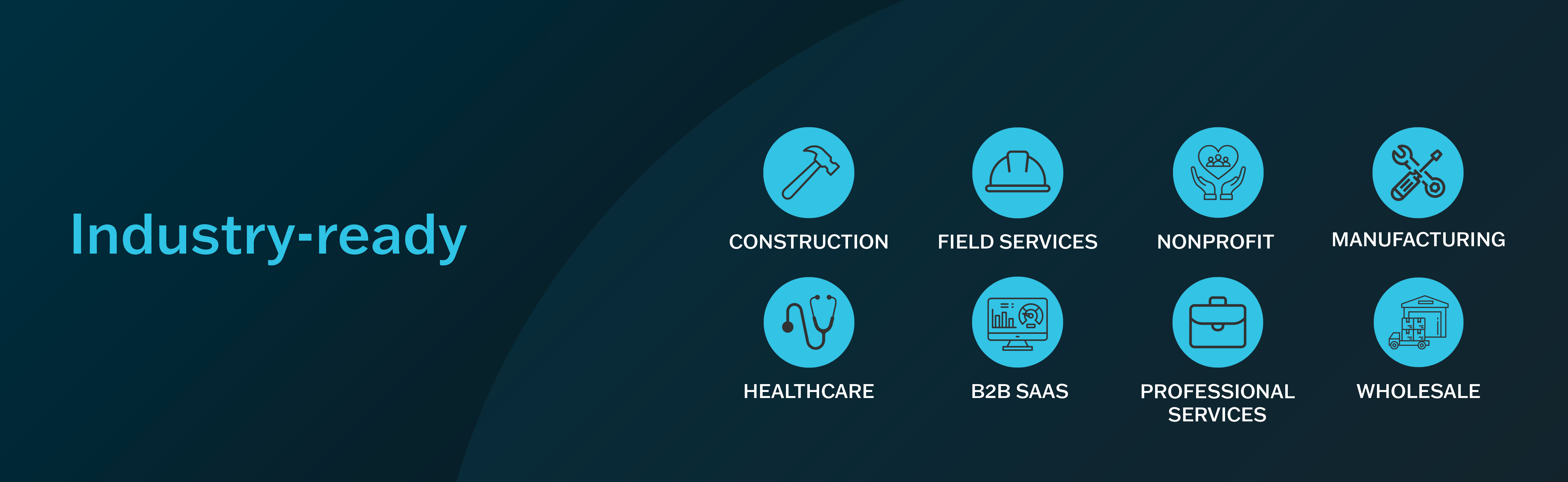
Industry-Ready
Run Your Business Your Way
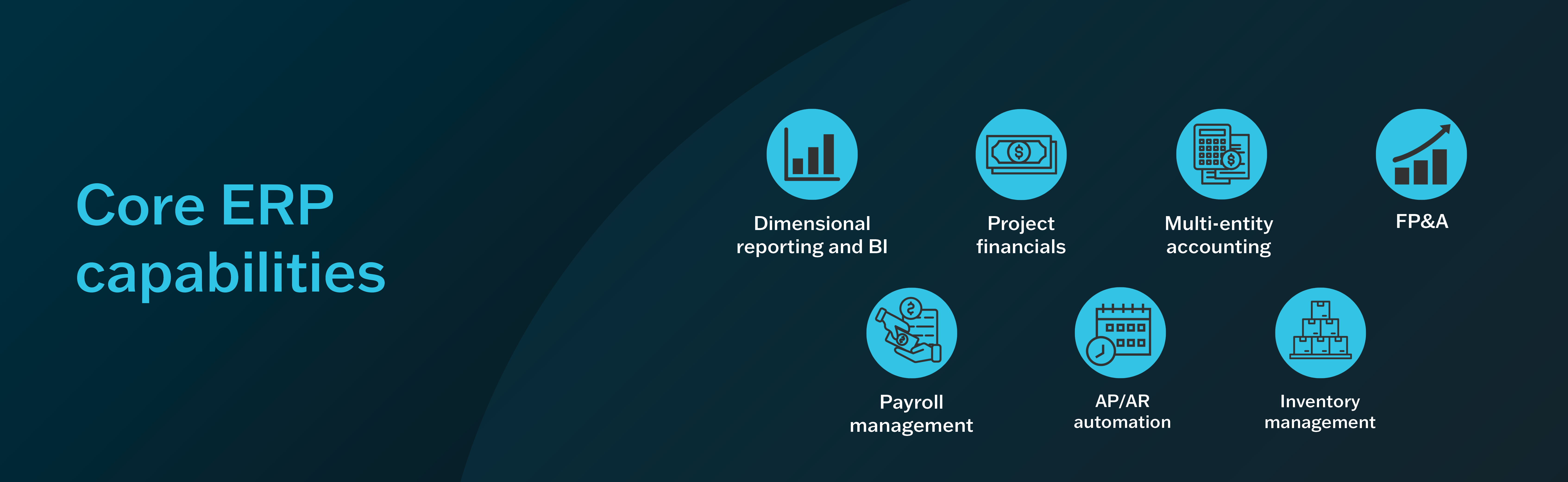
Core ERP Capablities
Everything a CFO Needs
That places it in an important position within the ERP market. A growing business may need far more than its existing accounting processes provide, but that doesn't necessarily mean it needs the scale, cost, or operational breadth of a larger traditional ERP implementation.
For some organizations, Intuit Enterprise Suite can occupy that middle ground.
How Is Intuit Enterprise Suite Different from QuickBooks?
QuickBooks and Intuit Enterprise Suite should not necessarily be viewed as competing products. For a growing QuickBooks customer, Intuit Enterprise Suite can represent the next level of financial and business management within the same broader Intuit environment.
The difference becomes clearer when you consider the problems each organization is trying to solve.
A business may be managing its day-to-day accounting effectively in QuickBooks while finding that other financial requirements now involve substantial manual work. It may have several entities to consolidate.
Management may need financial results by location, department, project, or another business dimension. Finance may be maintaining separate spreadsheets for budgeting and forecasting. Intercompany transactions may require manual reconciliation.
Intuit Enterprise Suite adds capabilities designed for these more involved requirements while retaining the Intuit environment familiar to QuickBooks users.
For QuickBooks Online customers, existing configurations can carry into Intuit Enterprise Suite, and multiple QuickBooks accounts can be connected under a single Intuit Enterprise Suite account.
Learn more in 5 Signs Your Business May Be Ready for the Next Step After QuickBooks
Latest Articles

From Outlook to Action: Highlights from Citrin Cooperman’s 2026 New England Economic Summit
Read More

Getting Your Habitat Affiliate’s Financial House in Order: Conversations with John Eusanio and Izett Barnett
Read More

'Tis the Season for Charitable Donations and Tax Deductions
Read More

Tax Planning Should Start Before a South Florida Real Estate Investment Is Made to Optimize Outcomes
Read More